
When God Calls You A Mighty Warrior While You're Hiding
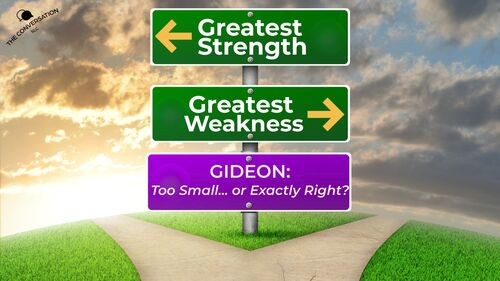
Have you ever felt like you're the least likely person God could use? If you've ever looked around and thought everyone else seems more qualified, more ready, or more capable than you, you're not alone. The story of Gideon reveals something profound about how God sees our weaknesses and fears differently than we do.
Living Under Oppression: When Fear Becomes Your Default
In Judges chapter 6, we find the Israelites living under Midianite oppression. This wasn't just physical domination - it was psychological warfare designed to break their spirit. The Midianites had convinced Israel that survival was all they could hope for, not thriving.
How Fear Takes Control
The Midianites used five strategic tactics that mirror how fear operates in our lives today:
They devastated everything Israel built, stealing crops and trampling what remained. This created a cycle of depletion where the Israelites never had the resources they needed.
They overwhelmed through sheer numbers, coming "like swarms of locusts." When you're facing overwhelming circumstances, you don't fight - you just try to survive.
They stole their livelihood, taking livestock and produce that served as both sustenance and currency. This stripped away economic stability and created generational impact.
They forced them into hiding places - caves and strongholds in the mountains while the Midianites occupied the fertile valleys below.
They created a culture of powerlessness where the mindset became "we can't win, we can't stop this, this is just life."
The Psychology of Fear-Based Living
When Creativity Works Against Us
God gives us the gift of creativity - the ability to imagine what doesn't yet exist. But this same gift can work in two directions. We can envision beauty and make it reality, or we can project dangerous scenarios that may never come to pass.
A Psychology Today study found that 85-91% of the things we fear will never actually happen. This means most of our fear-based decisions are responses to imaginary threats.
The Survival Mindset
Fear tells us it's better to be safe than effective. We start thinking thoughts like:
- "I'm just trying to scrape by"
- "This is good enough for me"
- "This is all I deserve"
- "I just need to get through this moment"
Instead of projecting into what could be, we project into what might go wrong.
FINDING OUR HERO IN THE WORST POSSIBLE PLACE
Gideon: The Unlikely Warrior
Where do we find God's chosen deliverer? Hiding in a winepress, threshing wheat in the worst possible location for the job. Winepresses are enclosed, hidden spaces with no wind - exactly the opposite of what you need for threshing grain effectively.
Gideon was doing necessary work, but in a place where he felt safe rather than where he could be effective. Fear had convinced him that survival was better than success.
God's Surprising Perspective
Right there in his hiding place, God shows up and calls Gideon a "mighty warrior." Not future warrior, not potential warrior - mighty warrior. God speaks into who He created Gideon to be, not who he was acting like.
"'The Lord is with you, mighty warrior.'" - Judges 6:12
God sees beyond current circumstances and into who He made us to be. We don't always see that, but God does.
The Inadequacy Response
Gideon's Excuses Sound Familiar
When called a mighty warrior, Gideon's response was immediate: "'Pardon me, my lord, but how can I save Israel? My clan is the weakest in Manasseh, and I am the least in my family.'" - Judges 6:15
Translation: "I'm too small. My background isn't impressive enough. I'm just not the guy."
These are excuses we hear ourselves making:
- "I didn't grow up the right way"
- "If you knew my past"
- "I've failed so many times"
- "I don't have the right personality"
- "I don't know enough"
Bottom line: "I'm just not enough."
The Clearest Sign You're in the Right Place
Here's the big idea: feeling inadequate may actually be the clearest sign that you're exactly where God wants you. When God calls you to step into a role where you feel completely qualified, He's not necessary. He wants to call you into a place where you feel completely over your head - where if God doesn't show up, you're doomed.
God's Process of Dependence
Stripping Away False Securities
Gideon eventually gathers 32,000 warriors to fight the Midianites. But God says that's too many. Why? "'You have too many warriors with you. If I let all of you fight the Midianites, the Israelites will boast to me that they saved themselves by their own strength.'" - Judges 7:2
God systematically reduces Gideon's army:
- First, He sends home everyone who is afraid: 22,000 leave
- Then, through a drinking test, He reduces the remaining 10,000 to just 300
Now Gideon faces "swarms of locusts" with only 300 men. He's completely exposed with no backup plan and no way to claim human victory.
Why God Removes Our Props
God intentionally removes everything we might trust in so that the only thing left is dependence on Him. This isn't to hurt us, but to position us for complete reliance on God's power rather than our own resources.
Three Truths About God's Calling
God Sees Differently Than We Do
Where Gideon saw weakness and fear, God saw calling and potential. God sees the person He created you to be, not just who you're acting like in this moment.
God Calls Before You Feel Ready
God often calls you before you feel like it fits. You haven't finished the training, taken the test, or completed the preparation. But God says you're about to learn on the job.
God Strips Away False Dependencies
God will remove the things you rely on - not to harm you, but to help you discover that He is sufficient. The more we pursue things we think we need for security, the more we realize we don't have what we actually need, creating a perpetual cycle of dependence on more stuff. God says, "You don't need more stuff. You just need Me."
The Myth of Self-Reliance
Examining "God Helps Those Who Help Themselves"
This popular phrase isn't found anywhere in Scripture. In fact, the Bible teaches the opposite - God helps the helpless. Being helpless is actually a prerequisite for being used by God.
This phrase often reflects American culture's emphasis on independence and pulling yourself up by your bootstraps. But it can become a justification for not helping others or for trying to earn God's favor through our own efforts.
The Balance of Willingness and Action
There's a difference between sitting around complaining without taking action and running ahead of God in our own strength. God wants us willing and active, but dependent on Him rather than our own capabilities.
LIFE APPLICATION
This week, identify one area where fear has convinced you that survival is all you can hope for. Maybe it's a relationship, a career decision, a ministry opportunity, or a personal challenge where you've been "threshing wheat in a winepress" - doing what's necessary but in a safe, ineffective way.
Ask yourself these questions:
- What would it look like to step out of my hiding place and trust God with this situation?
- How might God be calling me a "mighty warrior" in an area where I feel completely inadequate?
- What false securities or backup plans might God be asking me to release so I can depend fully on Him?
- Am I making decisions based on what I'm afraid of or what I'm dreaming of?
Remember, feeling inadequate isn't disqualification - it's often God's invitation to discover His strength in your weakness. The very thing that makes you feel unqualified might be exactly what God wants to use to demonstrate His power and bring Him glory.
Living Under Oppression: When Fear Becomes Your Default
In Judges chapter 6, we find the Israelites living under Midianite oppression. This wasn't just physical domination - it was psychological warfare designed to break their spirit. The Midianites had convinced Israel that survival was all they could hope for, not thriving.
How Fear Takes Control
The Midianites used five strategic tactics that mirror how fear operates in our lives today:
They devastated everything Israel built, stealing crops and trampling what remained. This created a cycle of depletion where the Israelites never had the resources they needed.
They overwhelmed through sheer numbers, coming "like swarms of locusts." When you're facing overwhelming circumstances, you don't fight - you just try to survive.
They stole their livelihood, taking livestock and produce that served as both sustenance and currency. This stripped away economic stability and created generational impact.
They forced them into hiding places - caves and strongholds in the mountains while the Midianites occupied the fertile valleys below.
They created a culture of powerlessness where the mindset became "we can't win, we can't stop this, this is just life."
The Psychology of Fear-Based Living
When Creativity Works Against Us
God gives us the gift of creativity - the ability to imagine what doesn't yet exist. But this same gift can work in two directions. We can envision beauty and make it reality, or we can project dangerous scenarios that may never come to pass.
A Psychology Today study found that 85-91% of the things we fear will never actually happen. This means most of our fear-based decisions are responses to imaginary threats.
The Survival Mindset
Fear tells us it's better to be safe than effective. We start thinking thoughts like:
- "I'm just trying to scrape by"
- "This is good enough for me"
- "This is all I deserve"
- "I just need to get through this moment"
Instead of projecting into what could be, we project into what might go wrong.
FINDING OUR HERO IN THE WORST POSSIBLE PLACE
Gideon: The Unlikely Warrior
Where do we find God's chosen deliverer? Hiding in a winepress, threshing wheat in the worst possible location for the job. Winepresses are enclosed, hidden spaces with no wind - exactly the opposite of what you need for threshing grain effectively.
Gideon was doing necessary work, but in a place where he felt safe rather than where he could be effective. Fear had convinced him that survival was better than success.
God's Surprising Perspective
Right there in his hiding place, God shows up and calls Gideon a "mighty warrior." Not future warrior, not potential warrior - mighty warrior. God speaks into who He created Gideon to be, not who he was acting like.
"'The Lord is with you, mighty warrior.'" - Judges 6:12
God sees beyond current circumstances and into who He made us to be. We don't always see that, but God does.
The Inadequacy Response
Gideon's Excuses Sound Familiar
When called a mighty warrior, Gideon's response was immediate: "'Pardon me, my lord, but how can I save Israel? My clan is the weakest in Manasseh, and I am the least in my family.'" - Judges 6:15
Translation: "I'm too small. My background isn't impressive enough. I'm just not the guy."
These are excuses we hear ourselves making:
- "I didn't grow up the right way"
- "If you knew my past"
- "I've failed so many times"
- "I don't have the right personality"
- "I don't know enough"
Bottom line: "I'm just not enough."
The Clearest Sign You're in the Right Place
Here's the big idea: feeling inadequate may actually be the clearest sign that you're exactly where God wants you. When God calls you to step into a role where you feel completely qualified, He's not necessary. He wants to call you into a place where you feel completely over your head - where if God doesn't show up, you're doomed.
God's Process of Dependence
Stripping Away False Securities
Gideon eventually gathers 32,000 warriors to fight the Midianites. But God says that's too many. Why? "'You have too many warriors with you. If I let all of you fight the Midianites, the Israelites will boast to me that they saved themselves by their own strength.'" - Judges 7:2
God systematically reduces Gideon's army:
- First, He sends home everyone who is afraid: 22,000 leave
- Then, through a drinking test, He reduces the remaining 10,000 to just 300
Now Gideon faces "swarms of locusts" with only 300 men. He's completely exposed with no backup plan and no way to claim human victory.
Why God Removes Our Props
God intentionally removes everything we might trust in so that the only thing left is dependence on Him. This isn't to hurt us, but to position us for complete reliance on God's power rather than our own resources.
Three Truths About God's Calling
God Sees Differently Than We Do
Where Gideon saw weakness and fear, God saw calling and potential. God sees the person He created you to be, not just who you're acting like in this moment.
God Calls Before You Feel Ready
God often calls you before you feel like it fits. You haven't finished the training, taken the test, or completed the preparation. But God says you're about to learn on the job.
God Strips Away False Dependencies
God will remove the things you rely on - not to harm you, but to help you discover that He is sufficient. The more we pursue things we think we need for security, the more we realize we don't have what we actually need, creating a perpetual cycle of dependence on more stuff. God says, "You don't need more stuff. You just need Me."
The Myth of Self-Reliance
Examining "God Helps Those Who Help Themselves"
This popular phrase isn't found anywhere in Scripture. In fact, the Bible teaches the opposite - God helps the helpless. Being helpless is actually a prerequisite for being used by God.
This phrase often reflects American culture's emphasis on independence and pulling yourself up by your bootstraps. But it can become a justification for not helping others or for trying to earn God's favor through our own efforts.
The Balance of Willingness and Action
There's a difference between sitting around complaining without taking action and running ahead of God in our own strength. God wants us willing and active, but dependent on Him rather than our own capabilities.
LIFE APPLICATION
This week, identify one area where fear has convinced you that survival is all you can hope for. Maybe it's a relationship, a career decision, a ministry opportunity, or a personal challenge where you've been "threshing wheat in a winepress" - doing what's necessary but in a safe, ineffective way.
Ask yourself these questions:
- What would it look like to step out of my hiding place and trust God with this situation?
- How might God be calling me a "mighty warrior" in an area where I feel completely inadequate?
- What false securities or backup plans might God be asking me to release so I can depend fully on Him?
- Am I making decisions based on what I'm afraid of or what I'm dreaming of?
Remember, feeling inadequate isn't disqualification - it's often God's invitation to discover His strength in your weakness. The very thing that makes you feel unqualified might be exactly what God wants to use to demonstrate His power and bring Him glory.
Posted in Greatest Strength Greatest Weakness
Recent
What Your Words Reveal About You: Lessons from Stephen's Final Words
October 4th, 2026
Famous Last Words: What Moses Teaches Us About Legacy, Transition, and Speaking Courage
September 27th, 2026
Famous Last Words: What the Bible Teaches Us About the Power of Our Words
September 20th, 2026
All for One and One for All: What the Church Is Really About
September 13th, 2026
How Should Christians Engage the World? Answering Hard Questions About Faith, Neighbors, and the Bible
September 7th, 2026
Archive
2026
May
June
Do I Matter? Understanding Your Value Through God's EyesWhen Life Gets Hard: Understanding God's Formation ProcessThe Season of Training: Preparing for God's PurposeWhat Does It Mean to Be Spiritually Mature? Lessons from EcclesiastesWhat Does It Mean to Be a Good Steward? Understanding Your God-Given Influence
August
Partial Obedience Is Still Disobedience: Lessons from the Book of JoelWhat Does God Really Want From Us? Lessons From the Prophet AmosWhat Do You Do When God Doesn't Make Sense? Lessons from HabakkukWhat Does God Actually Want From You? Lessons from the Book of MicahAre You Really as Faithful as You Think You Are? Lessons from the Book of Malachi
September
How Should Christians Engage the World? Answering Hard Questions About Faith, Neighbors, and the BibleAll for One and One for All: What the Church Is Really AboutFamous Last Words: What the Bible Teaches Us About the Power of Our WordsFamous Last Words: What Moses Teaches Us About Legacy, Transition, and Speaking Courage
No Comments